
The ever-evolving field of Artificial Intelligence (AI) continually revolutionizes various aspects of our lives, especially in the realm of art and creativity. AI image generators, with their ability to create compelling and visually arresting images from text prompts, have developed tremendously, particularly as we progress into 2024. This article delves into the rise of AI image generators, tracing their origins, understanding their mechanics, celebrating the pioneers, discussing the democratization of creativity, and envisioning their future evolution.
Key Takeaways
- AI image generators have transformed the landscape of digital creativity, enabling the synthesis of art from simple text prompts to intricate narratives.
- Technological advancements, particularly in GANs and machine learning, have been fundamental in the development and refinement of AI art generators.
- Platforms like Midjourney, DALL-E 3, Stable Diffusion, Night Cafe, and Adobe Firefly have become pioneers, each with unique capabilities that redefine art generation.
- The accessibility of AI art generators has democratized creativity, allowing a broader audience to participate in artistic creation and fostering a community of AI artists.
- The future of AI image generators promises a convergence of AI and human creativity, potentially leading to new art forms and further blurring the line between technology and traditional artistry.
Tracing the Origins: The Birth of AI Image Generators
From Concept to Reality: The First Steps
The inception of AI image generators marked a pivotal moment in the intersection of technology and creativity. The journey from theoretical models to functional tools has been driven by a blend of visionary ideas and technological advancements. The initial steps in this evolution involved both the development of foundational algorithms and the creation of platforms that could interpret artistic intent.
- Early prototypes focused on simple pattern recognition and replication.
- Subsequent iterations began to incorporate more complex structures and aesthetics.
- The leap from static patterns to dynamic, context-aware images was a significant milestone.
The transformative potential of AI in art was recognized early on, but it was the practical application that brought these concepts to life.
As the technology matured, the focus shifted from mere possibility to practical usability. The pioneers in this field navigated numerous challenges, laying the groundwork for the sophisticated systems we see today. Their relentless pursuit of innovation set the stage for a future where AI and human creativity would become inextricably linked.
Key Players in Early AI Art Development
The advent of AI image generators marked a pivotal moment in the fusion of technology and art. Key players in the early development of AI art set the stage for a revolution that would later transform the creative landscape. These pioneers not only developed the foundational algorithms but also created platforms that made AI art accessible to a broader audience.
- DALL-E 2: A breakthrough in AI art creation, setting a high bar for realism and versatility.
- Starry AI: Known for its customizable features, including the Altair and Orion art styles.
- NightCafe: Focused on community-driven art creation, emphasizing user engagement and accessibility.
The significance of these early contributions cannot be overstated. They laid the groundwork for a new era of artistic expression, where the barriers between human creativity and algorithmic precision began to blur.
As we delve deeper into the history of AI art generators, it’s essential to recognize the impact of these early innovators. Their work not only paved the way for the tools we see today but also sparked a conversation about the ethical implications of AI in art. The dialogue around copyright, originality, and the impact on traditional artists continues to shape the evolution of this field.
Technological Milestones and Breakthroughs
The journey of AI image generators has been marked by significant technological milestones that have propelled the field forward. AI technology has been the cornerstone of this evolution, enabling machines to not only learn from vast datasets but also to create with a level of complexity and nuance that was once the exclusive domain of human artists.
- The inception of Generative Adversarial Networks (GANs) revolutionized the way AI systems approach creativity.
- Subsequent advancements in neural network architectures have led to more sophisticated and diverse artistic outputs.
- The integration of natural language processing allowed for the translation of text prompts into intricate visual representations.
The democratization of creativity through AI technology has been a game-changer, making art creation accessible to a wider audience and fostering a new era of digital artistry.
As we continue to witness the rise of AI image generators, it is clear that these technological breakthroughs are not just milestones but also stepping stones to a future where AI and human creativity coalesce to redefine the boundaries of art.
Understanding the Mechanics: How AI Image Generators Work
Decoding Generative Adversarial Networks (GANs)
At the heart of AI image generation lies the innovative technology known as Generative Adversarial Networks, or GANs. These networks are a form of unsupervised machine learning, consisting of two parts: the generator and the discriminator. The generator creates images, while the discriminator evaluates them. Through a continuous cycle of competition and improvement, GANs can produce remarkably detailed and creative visuals.
GANs revolutionize image creation by learning from vast datasets of existing artwork, enabling the synthesis of new images that are both unique and aesthetically compelling.
- The generator starts by creating an image from a random noise pattern.
- The discriminator assesses the image, comparing it to real images from the dataset.
- Feedback from the discriminator guides the generator to improve its next image.
- This process repeats, with the generator striving to create images that the discriminator cannot distinguish from real ones.
GANs embody the convergence of technology and artistry, where algorithms not only replicate but also innovate, pushing the boundaries of what’s possible in digital art creation.
The Role of Machine Learning in Artistic Creation
At the core of AI image generators lies the intricate dance of machine learning algorithms, which empower these systems to produce art that is both innovative and captivating. Machine learning is the engine that drives artistic creation in the realm of AI, transforming vast datasets of visual information into the building blocks of digital masterpieces.
The essence of AI-driven art is not just in the generation of images, but in the learning process that continuously improves with each iteration.
Machine learning in AI art generators typically involves several key stages:
- Data Collection: Curating a diverse dataset of images for the AI to learn from.
- Pattern Recognition: The AI analyzes the dataset to identify and understand artistic elements and styles.
- Training: Through a process called deep learning, the AI refines its ability to create art by iteratively generating images and adjusting based on feedback.
- Output Generation: Once trained, the AI can produce original artwork from textual prompts or other forms of input.
As we delve deeper into the mechanics of these generators, it becomes clear that the role of machine learning is not just technical but profoundly creative, enabling a symbiotic relationship between human imagination and computational power.
From Text Prompts to Visual Masterpieces
The transformation of AI text prompts into visual masterpieces marks a significant leap in the field of AI image generation. This process has enabled users to articulate their creative visions through simple text descriptions, which AI then interprets to produce stunning and often unexpected visual outputs.
- UNLEASHING CREATIVITY: Abstract prompts allow for the exploration of shapes, colors, and forms, giving rise to unique and often surreal artworks.
- THE MAGIC OF HYBRID PROMPTS: Combining elements from different realms creates a fusion of concepts that can be both intriguing and thought-provoking.
- CELEBRATING ARTISTIC STYLES: Art genre prompts empower users to generate images in the style of famous artists or art movements, bridging the gap between AI and traditional art forms.
- HARNESSING PRECISION: Detailed prompts cater to those seeking high levels of specificity in their images, from intricate patterns to complex scenes.
- CRAFTING FUNCTIONAL IMAGES: Design prompts focus on creating images with a purpose, such as logos, layouts, and other design elements.
The ease with which AI text to image generators facilitate the conversion of ideas into visual representations is nothing short of revolutionary. It democratizes art creation, making it accessible to anyone with a vision, regardless of their artistic skill level.
The Pioneers of AI-Driven Artistry
Midjourney and DALL-E 3: Trailblazers in AI Creativity
In the burgeoning field of AI-generated art, two platforms have emerged as pioneers, each with its own distinct approach to creativity. Midjourney stands out with its innovative use of randomized prompts and image blending, offering a depth of creativity that, while complex, rewards those who master its intricacies. On the other hand, OpenAI’s DALL-E 3 boasts a more user-friendly model, integrating the advanced capabilities of GPT 4.0 to transform text prompts into visual art with remarkable versatility.
Midjourney and DALL-E 3 have set new benchmarks in AI-driven artistry, each contributing uniquely to the field’s evolution and setting the stage for future innovations.
While Midjourney thrives within the Discord community, DALL-E 3 extends its reach through ChatGPT Plus, making it accessible to a wider audience. Despite their differences, both platforms share a common goal: to democratize the process of art creation and make it accessible to all, regardless of skill level.
- Midjourney: Known for complex artistry and depth
- DALL-E 3: Renowned for versatility and user-friendliness
These trailblazers are not just redefining the boundaries of art; they are reshaping the very notion of creativity in the digital age. As we continue to explore the capabilities and impact of these platforms, it becomes clear that the future of art lies in the harmonious blend of human imagination and AI innovation.
Stable Diffusion and Night Cafe: Expanding the Horizons
The advent of AI image generators such as Stable Diffusion and Night Cafe has marked a significant leap in the field of digital artistry. Stable Diffusion DreamStudio emerges as a robust web app, offering a rich set of features with a generous free trial, making it a go-to platform for both novice and experienced creators. Its expansive settings allow for a high degree of customization, catering to a wide array of artistic preferences.
Night Cafe, on the other hand, is renowned for its community-centric approach. With monthly challenges and a rich feature set, it fosters an environment where creators are not just passive viewers but active participants. This engagement is crucial in driving the platform’s constant evolution and in nurturing a vibrant community of AI artists.
The capabilities of these platforms exemplify the technological strides that enable anyone to bring their creative visions to life.
The table below highlights the contrasting features of Stable Diffusion and Night Cafe, illustrating their unique contributions to the AI art landscape:
| Feature | Stable Diffusion DreamStudio | Night Cafe |
|---|---|---|
| Accessibility | Generous free trial | Monthly challenges |
| Customization | Expansive settings | Rich feature set |
| Community Engagement | – | Vibrant creator community |
As we continue to witness the expansion of horizons in AI-driven artistry, it is clear that platforms like Stable Diffusion and Night Cafe are not just redefining art; they are reshaping the very fabric of creative expression.
The Impact of Adobe Firefly on Professional Design
Adobe Firefly has emerged as a transformative force in the realm of professional design, leveraging the power of AI to redefine the creative process. Its intuitive interface and advanced features have enabled designers to push the boundaries of innovation, translating abstract ideas into tangible designs with unprecedented speed and precision.
- Enhanced Efficiency: Adobe Firefly’s AI algorithms streamline design workflows, significantly reducing the time required to generate complex images.
- Creative Freedom: With the ability to interpret text prompts, Firefly offers designers a new level of creative freedom, allowing for rapid experimentation and iteration.
- Precision and Detail: The platform’s attention to detail ensures that even the most intricate designs are rendered with precision, catering to the high standards of professional design.
Adobe Firefly stands not just as a tool, but as a catalyst for a new era of design, where the barriers between imagination and execution are increasingly blurred. This shift is not only reshaping the design industry but also expanding the possibilities for creative expression across various fields.
The Democratization of Creativity: Accessibility and Community
Breaking Down Barriers: Free AI Art Generators
The advent of free AI art generators has been a game-changer in democratizing creativity. These platforms have made it possible for anyone with internet access to explore the realms of digital artistry without financial barriers. The significance of this cannot be overstated, as it opens up the world of art creation to a broader audience, fostering inclusivity and diversity in artistic expression.
The ease of use and accessibility of free AI art generators have empowered individuals from all walks of life to unleash their creativity and share their visions with the world.
Here’s a glimpse at some of the top free AI art generators that are making waves in the community:
- DeepArt: Known for its style transfer technique, it allows the fusion of different artistic styles onto a chosen image.
- Dream by Wombo: Boasts a user-friendly interface that transforms text prompts into visual artworks swiftly.
These tools not only provide a canvas for seasoned artists but also serve as a learning platform for novices. They are reshaping the landscape of art, making it more accessible and less intimidating for those who may not have traditional art training. The impact of these generators extends beyond individual creativity; they are also fostering a new culture of art appreciation and participation.
Fostering a Community of AI Artists
The advent of AI image generators has not only revolutionized the way art is created but has also played a pivotal role in fostering a community of AI artists. These platforms serve as a nexus for individuals from diverse backgrounds to converge, share, and collaborate, thus nurturing a new culture of digital artistry.
Platforms like Midjourney, DALL-E 3, and Night Cafe have become hubs where both novices and professionals can explore the realms of AI-generated art. They offer a space where users can engage in AI Chat, exchange ideas, and push the boundaries of creativity. This sense of community is instrumental in driving innovation and inclusivity in the field of AI art.
The collective wisdom and shared experiences within these communities are invaluable. They provide a support system for artists to learn, grow, and challenge the status quo of traditional art forms.
The following list highlights the key benefits of these communities:
- Encouragement of artistic experimentation and risk-taking
- Exchange of knowledge and techniques among members
- Opportunities for collaboration on projects
- Access to feedback and constructive criticism
- A platform for showcasing and discovering new talent
As AI art generators continue to evolve, the communities around them are likely to expand, bringing together more artists and enthusiasts who are eager to explore the potential of AI in art.
The Ethical Implications of AI in Art
The integration of AI into the art world has sparked a complex debate on ethics, raising questions about copyright, originality, and the impact on traditional artists. As AI art generators become more prevalent, it’s essential to consider these issues carefully and strive for responsible use.
The ethical use of AI in art requires a balance between innovation and respect for existing creative works.
Here are some key ethical considerations:
- Authorship: Determining who the ‘artist’ is can be challenging. Is it the creator of the AI, the user who inputs the prompt, or the AI itself?
- Copyright: AI-generated art often draws from vast datasets, which may include copyrighted material. The implications for copyright law are still being unraveled.
- Economic Impact: The introduction of AI art generators could disrupt the traditional art market, affecting the livelihoods of human artists.
While these considerations are critical, it’s equally important to engage with AI art generators mindfully, adhering to the rules and policies set forth to navigate the ethical landscape. The artistic community must not only embrace these technologies but also contribute to shaping the future of creative expression.
Envisioning the Future: The Evolution of AI Image Generators
Emerging Trends in AI-Generated Art
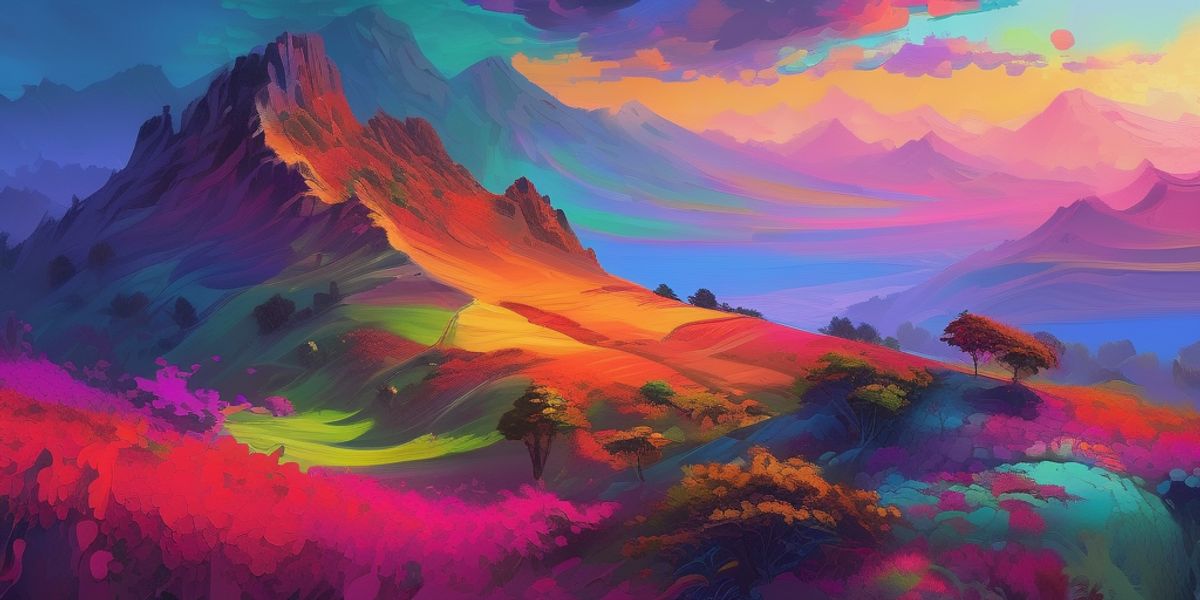
The landscape of AI Image Generators is rapidly evolving, with new trends emerging that push the boundaries of creativity and technology. As these generators become more sophisticated, we’re witnessing a surge in customization options, allowing users to craft images with unprecedented realism and artistic flair. The ability to mimic specific artists’ styles is also advancing, offering a new dimension to AI-generated art.
The versatility of AI Image Generators is expanding, enabling them to interpret and reimagine various art genres. From ‘cubist portraits’ to ‘pop art cityscapes’, these tools are not only replicating but also innovating upon human artistic expressions.
Ethical considerations remain a critical aspect of this evolution. The dialogue around copyright, originality, and the impact on traditional artists continues to shape the responsible use of AI in art. As we look to the future, the integration of AI Image Generators with human creativity promises to unveil a new era of artistic collaboration.
- Customization: Enhanced user control over the final image output.
- Realism: Improved algorithms for life-like image generation.
- Style Mimicry: Advanced capabilities to emulate specific artistic styles.
- Ethical Use: Ongoing discussions on the responsible application of AI in art.
- Human-AI Collaboration: Emerging partnerships between AI tools and human artists.
The Convergence of AI and Human Creativity
The fusion of AI and human creativity marks a transformative era in the arts. AI art generators are not mere tools; they are collaborators, enhancing the creative process and enabling artists to explore new realms of possibility. This synergy is evident in the way AI interprets human prompts, translating abstract concepts into tangible visual art.
- Midjourney’s intricate patterns
- DALL-E 3’s adaptive image synthesis
- Night Cafe’s community-driven creations
- Adobe Firefly’s design innovations
- Stable Diffusion’s content democratization
Each platform brings a unique approach to the table, reflecting the diverse potential of AI in artistic expression. As we delve deeper into this partnership, we discover that AI does not diminish the artist’s role but rather amplifies it, offering a digital extension to human imagination.
The ethical landscape of AI art continues to be a topic of intense debate. As creators and users of AI art generators, it is imperative to navigate this terrain with awareness and responsibility, ensuring that the convergence of AI and human creativity remains a force for positive transformation.
Predicting the Next Frontier in AI Art
As AI image generators continue to evolve, the next frontier in AI art seems poised to transcend current limitations, offering even more personalized and nuanced creations. The integration of AI with emerging technologies is expected to unlock unprecedented artistic possibilities.
- Enhanced Customization: Future AI art generators will likely offer more advanced customization options, allowing users to fine-tune their creations to an unprecedented degree.
- Increased Realism: We can anticipate a surge in the ability of AI to produce hyper-realistic images, blurring the lines between AI-generated art and human-made pieces.
- Mimicking Specific Styles: AI will become more adept at mimicking the styles of renowned artists, providing users with the tools to create art in the vein of their favorite painters or illustrators.
The potential for AI to not only replicate human creativity but also to inspire new forms of artistic expression is immense. As we look to the future, the synergy between human ingenuity and artificial intelligence promises to usher in a new era of creativity.
The table below outlines potential advancements and their impact on AI art generators:
| Advancement | Impact on AI Art Generators |
|---|---|
| Real-time Collaboration | Enabling artists to work together with AI in a live, interactive environment. |
| Cross-Media Creation | Facilitating the generation of art that spans multiple mediums, such as combining visual arts with music or literature. |
| Emotional Intelligence | Allowing AI to understand and evoke specific emotions through art, enhancing the viewer’s experience. |
As we venture into this uncharted territory, the art world must prepare for a paradigm shift where the boundaries of creativity are continually expanded by the capabilities of AI.
Conclusion
As we conclude our exploration of the evolution of creativity through AI image generators, it is evident that these tools have transcended mere novelty to become pivotal in the realm of digital artistry. The rise of platforms like Adobe Firefly, Stable Diffusion, and DALL-E 3 has not only democratized artistic expression but also challenged our traditional perceptions of creativity. These generators, equipped with the ability to interpret complex prompts and produce visually stunning images, are reshaping the landscape of design, art, and even commercial applications. As we look to the future, the potential for AI in creative industries is boundless, promising a fusion of human ingenuity and machine intelligence that will continue to redefine the boundaries of what is possible in art and beyond.
Frequently Asked Questions
What are AI image generators?
AI image generators are platforms that use machine learning algorithms, particularly generative adversarial networks (GANs), to create visual art. They analyze thousands of images to learn artistic patterns and styles, enabling them to generate unique pieces of art from text prompts or other forms of input.
Who are the pioneers of AI-driven artistry?
Pioneers in the field of AI-driven artistry include platforms like Midjourney, DALL-E 3, Stable Diffusion, Night Cafe, and Adobe Firefly. These platforms have been instrumental in advancing the technology and making it accessible to a wider audience.
How do AI art generators transform text prompts into images?
AI art generators use artificial neural networks to interpret and visualize text prompts into distinct images. The technology has become increasingly refined, allowing for detailed and engaging visual representations of abstract concepts or narratives.
What is the impact of AI on traditional art and design?
AI art generators are not only redefining the boundaries of art but are also impacting traditional art and design by providing new tools for creativity. These platforms can assist in logo and design creation, offering businesses and individuals new ways to express visual ideas.
Can AI image generators emulate different art styles?
Yes, AI image generators can emulate different art styles by responding to genre-specific prompts, such as ‘cubist portrait’ or ‘pop art cityscape’. They can mimic or reinterpret distinctive artistic movements, resulting in an original fusion of classic styles and AI’s unique rendering capabilities.
What are the ethical implications of AI in art?
The use of AI in art raises ethical questions regarding authorship, originality, and the potential for misuse, such as copyright infringement. It also challenges traditional notions of creativity and prompts a discussion on the balance between human and machine-generated art.