
Let’s dive into the world of Artificial Intelligence (AI) and the spectacular advent of a powerful image generator, a revolutionary tool that’s set to redefine the fields of digital design, data visualization, and much more. Introducing Novel AI, an innovation that’s a giant leap forward in AI technology and a testament to the potential of machine learning. This cutting-edge tool is transforming the concept of content creation and paving the way for an exciting new era of possibilities.
Key Takeaways
- AI image generators like Novel AI are revolutionizing visual media by enabling rapid creation of high-quality, unique images that align with user prompts.
- The technology behind AI image generation is not only advanced but also efficient, allowing for quick iterations and continuous learning to produce increasingly refined visuals.
- Across industries, AI image generators are transforming design and content creation, enhancing scientific research with visualizations, and democratizing design for broader accessibility.
- The future of AI-driven visual media promises advancements in 3D and immersive experiences, personalized content creation, and the continual evolution of AI image generation technologies.
- AI-generated imagery holds significant cultural and emotional value, offering new ways to express emotions, tell stories, and forge a human connection through personalized visual content.
The Mechanics Behind AI Image Generation
Understanding the Core Algorithms
At the heart of AI Image generation lies a complex interplay of machine learning algorithms and artificial neural networks. These systems are trained on extensive datasets, allowing them to recognize and replicate patterns and structures within visual data. The core algorithms are the essence of an AI Image generator’s ability to create images from textual prompts.
The process begins with the AI analyzing the text input, identifying key elements that need to be translated into visual components. It then synthesizes these elements, drawing from its learned patterns, to construct an image that aligns with the prompt’s specifications.
The true power of AI Image generators is not just in their technical prowess but in their potential to revolutionize design and accessibility across various sectors.
Understanding these algorithms is crucial for appreciating how AI Image generators are transforming visual media. They are not just tools for creating images but are also platforms for continuous learning and improvement, adapting to new data and evolving with each interaction.
Efficiency and Speed of the Generation Process
The advent of AI image generators has brought about a seismic shift in the production of visual media, with efficiency and speed at the forefront of this revolution. The ability to rapidly produce high-quality images is transforming industries, condensing what once took hours into mere minutes. This acceleration is not just about raw speed; it’s about the agility to iterate and evolve designs quickly, fostering an environment ripe for innovation.
- In gaming and film, AI accelerates character and scenery design, enhancing creative workflows.
- Education benefits from real-time visual design instruction, engaging students with immediate results.
- The technology’s maturity promises to reshape visual content creation across diverse sectors.
The end product is a high-resolution visual that not only meets the prompt but does so with remarkable swiftness, thanks to sophisticated algorithms. With each generation cycle, the AI learns and refines its output, ensuring that the future of visual media is not only faster but also smarter.
Continuous Learning and Improvement
AI image generators are not static tools; they are dynamic systems that evolve over time. Through iterative learning processes, these generators continuously enhance their capabilities, refining their algorithms with each new dataset they encounter. This ongoing improvement is pivotal for the nuanced generation of images that are increasingly complex and lifelike.
The potential for AI image generators to revolutionize various sectors is immense. In education, they transform abstract concepts into vivid visuals, aiding experiential learning. In marketing, they adapt in real-time to audience preferences, crafting more engaging content. The democratization of design through AI opens doors for a wider array of creators, fostering innovation and diversity in visual culture.
The synergy between AI’s learning algorithms and the ever-growing datasets ensures a trajectory of advancement that promises to redefine our visual experiences.
As AI image generators learn and improve, they pave the way for a future where visual media is more accessible, personalized, and resonant with its audience. The table below illustrates the progressive impact of AI on visual media generation:
| Sector | Before AI | With Continuous AI Learning |
|---|---|---|
| Education | Static visuals | Dynamic, interactive learning tools |
| Marketing | Generic content | Tailored, real-time adaptive visuals |
| Design | Limited access | Broad, democratized creation |
This evolution is not just technical; it’s cultural, affecting how we create, perceive, and interact with visual media.
Practical Applications Across Industries
Transforming Design and Content Creation
The advent of AI image generators is ushering in a new era for design and content creation. These tools are democratizing the ability to produce high-quality visuals, making it accessible to a wider range of creators and innovators. The impact is evident across various sectors, from advertising to education, where the speed and flexibility of AI-driven design are enabling more dynamic and engaging experiences.
- In advertising, the ability to generate captivating visuals on-demand is transforming marketing strategies.
- The gaming and film industries benefit from expedited production timelines and enhanced creative freedom.
- Education is revolutionized by interactive design learning, allowing students to visualize concepts instantly.
The potential for AI image generators to initiate a significant shift in visual content design and interpretation is immense. Their integration into diverse fields is not only revolutionizing the design process but also enriching the ways we learn and engage with visual media.
The technology’s maturation promises a future where innovation in visual culture is driven by a broad spectrum of voices and ideas. As these tools become more integrated into various industries, we can anticipate a landscape where visual content is not just designed but also experienced in novel and impactful ways.
Enhancing Scientific Research with Visualizations
The advent of AI image generators is proving to be a boon for scientific research, where visualizations play a pivotal role in data interpretation and communication. These tools are transforming the way complex data is simplified and conveyed, making it more accessible to a wider audience. The ability to quickly generate accurate and detailed images from data is enhancing the clarity and impact of scientific findings.
- AI-generated visuals aid in identifying patterns and anomalies in data.
- They facilitate the creation of dynamic models for simulations and predictions.
- Researchers can visualize theoretical concepts that were previously difficult to depict.
The potential of AI image generators extends beyond mere data representation; they are becoming integral to the storytelling aspect of scientific communication, enabling researchers to illustrate their discoveries in compelling ways.
The technology’s maturity is expected to initiate a significant shift across various sectors, including education, where it serves as an advanced teaching aid. In the commercial sphere, it could lead to dynamic marketing strategies with real-time visual content adaptation. The democratization of design through AI is poised to usher in a wave of innovation, with diverse perspectives contributing to the evolution of visual culture.
Democratizing Design for Broader Accessibility
The advent of AI image generators is not just a technological marvel; it’s a gateway to unprecedented inclusivity in the field of design. By equipping individuals without formal design backgrounds with the tools to create compelling visuals, these generators are dismantling long-standing barriers to entry. This shift is not merely about access; it’s about empowering a diverse array of voices to contribute to the visual narrative of our time.
- Innovation: A broader range of perspectives fueling the evolution of visual culture.
- Inclusivity: High-quality design tools becoming accessible to all, regardless of professional training.
- Education: Interactive platforms for students to explore and actualize design concepts.
- Industry: Advertising, gaming, and film leveraging rapid visual creation for enhanced productivity.
The democratization of design through AI is fostering a dynamic ecosystem where creativity is no longer the exclusive domain of the trained professional but a shared canvas for collective expression.
The implications for industries are profound. In advertising, the ability to generate captivating visuals on-demand could transform audience engagement strategies. The gaming and film sectors stand to benefit from accelerated production cycles and expanded creative possibilities. Moreover, in educational settings, these tools offer a hands-on approach to learning, enabling students to experiment and learn through direct visual feedback.
The Impact of AI on Creative Professions
Revolutionizing the Roles of Artists and Designers
The advent of AI image generators is not just altering the landscape of visual media; it’s revolutionizing the roles of artists and designers. These professionals are now equipped with tools that can amplify their creativity, allowing them to produce intricate designs at an unprecedented pace. The synergy between human ingenuity and AI’s computational power is fostering a new era of artistic expression.
- Democratization of design: Broader access to high-quality visual content creation.
- Inclusivity: Diverse perspectives fueling innovation in visual culture.
- Industry transformation: Advertising, gaming, and film benefit from rapid, high-quality visual production.
The potential of AI image generators extends far beyond traditional design boundaries, enabling a significant expansion of creativity and innovation across various industries.
As AI continues to mature, its impact is felt across multiple sectors, initiating a significant shift in how visual content is designed and interpreted. The powerful image generator is not only streamlining the design process but also contributing to fields like scientific research, where visualizations are key. This marks a pivotal moment in the evolution of visual culture, where the barriers to entry are lowered, and the canvas of possibility is expanded for all.
The Synergy Between Human Creativity and AI Precision
The collaboration between human creativity and AI precision is forging a new frontier in visual media. Artists and designers are now empowered to transcend traditional boundaries, leveraging AI as a tool to amplify their creative visions. The AI’s role is to handle the meticulous and labor-intensive aspects of image generation, allowing creatives to focus on the conceptual and innovative facets of their work.
The synergy can be summarized in a few key points:
- AI handles the technical execution with precision.
- Creatives direct the AI with their unique vision and style.
- The iterative process between human and AI leads to refined outcomes.
- AI’s rapid generation allows for quick experimentation and evolution of ideas.
The true potential of this partnership lies in the balance of control and freedom. While AI provides a canvas of infinite possibilities, it is the human touch that instills meaning and emotion into the visuals.
As we move forward, the integration of AI in creative professions is not about replacing human talent but augmenting it. The future promises a collaborative ecosystem where AI tools and human creativity coexist, each enhancing the other’s strengths to produce work that neither could achieve alone.
Ethical Considerations and the Future of Art
The integration of AI image generators into the art world has sparked a complex debate around ethics and the future of creative professions. The question of authorship and originality in the age of AI-generated art is becoming increasingly pertinent. As these tools become more sophisticated, they challenge traditional notions of creativity and the role of the artist.
- The potential for AI to infringe on intellectual property rights.
- The risk of devaluing human creativity and labor.
- The need for clear ethical guidelines in the use of AI for art creation.
The democratization of design through AI opens up a world of possibilities for innovation and diversity in visual culture. However, it also necessitates a careful consideration of the implications for artists and the integrity of the art industry.
As we look to the future, it is crucial to balance the benefits of AI image generators with the protection of artistic communities. The development of ethical frameworks and policies will be key in ensuring that the evolution of art remains respectful and inclusive of human creativity.
The Future Landscape of AI-Driven Visual Media
Advancements in 3D and Immersive Experiences
The evolution of AI image generators is paving the way for groundbreaking developments in 3D modeling and immersive experiences. The integration of AI with virtual and augmented reality is transforming how we interact with digital content, creating new realms of possibility for both creators and consumers.
- AI-driven 3D image generation is enhancing the visual fidelity of virtual worlds, making them more realistic and engaging.
- The synergy between AI and VR/AR technologies is leading to more intuitive and interactive user experiences.
- Real-time rendering powered by AI is revolutionizing the speed at which immersive environments can be created and modified.
The potential of AI to enrich immersive experiences is not just limited to entertainment but extends to education, where it can visualize complex concepts, and to marketing, where it can tailor experiences to consumer preferences.
The implications of these advancements are vast, with AI image generators becoming a crucial tool in industries ranging from gaming to film, and beyond. The ability to rapidly prototype and iterate on visual elements is not only accelerating production timelines but also empowering creators to push the boundaries of innovation. As AI continues to mature, its role in shaping the future of visual media is undeniable, promising a landscape where the lines between the digital and physical worlds become increasingly blurred.
The Role of AI in Personalized Content Creation
The advent of AI image generators has ushered in a new era of personalized content creation, enabling a level of customization previously unattainable. AI-driven tools are now capable of tailoring visuals to individual preferences and contexts, transforming the landscape of visual media.
- Efficiency: AI accelerates the design process, swiftly generating images that cater to specific user requests.
- Customization: Users can input detailed prompts, resulting in highly personalized imagery.
- Scalability: AI can produce a vast array of images, supporting large-scale content creation.
The implications for industries such as advertising and marketing are profound. AI image generators like Adobe Firefly and Novel AI offer the ability to create visuals that resonate on a personal level, aligning with branding criteria and enhancing user engagement.
The true power of AI in visual media lies not just in its technical prowess but in its capacity to forge a deeper connection with audiences through personalized content.
As these technologies continue to learn and evolve, the potential for even more nuanced and individualized content creation is boundless. The future promises a symbiosis of human creativity and AI precision, where the boundaries of visual storytelling are continually expanded.
Anticipating the Next Wave of AI Image Generators
As we stand on the brink of a new era in AI image generation, the anticipation for what’s next is palpable. The evolution of AI technology promises a future where image generators will produce even more advanced 3D spatial photos and immersive visual experiences. The integration of chatbot advancements will likely enhance user interaction, allowing for more intuitive and collaborative creation processes.
The continuous refinement of machine learning algorithms suggests that the next wave of AI image generators will not only refine the quality of visuals but also revolutionize the way we interact with and interpret visual content.
The potential applications of these advancements are vast, and we can expect to see significant impacts across various sectors:
- In the arts: Artists and designers will have new tools to push the boundaries of creativity.
- In education: Enhanced visual aids could transform teaching and learning experiences.
- In entertainment: Personalized and emotionally resonant content could become the norm.
As we look forward to these developments, it’s clear that the future of visual media is intertwined with the progress of AI image generators. The key to harnessing their full potential will lie in the synergy between human creativity and AI precision.
The Cultural and Emotional Significance of AI Imagery
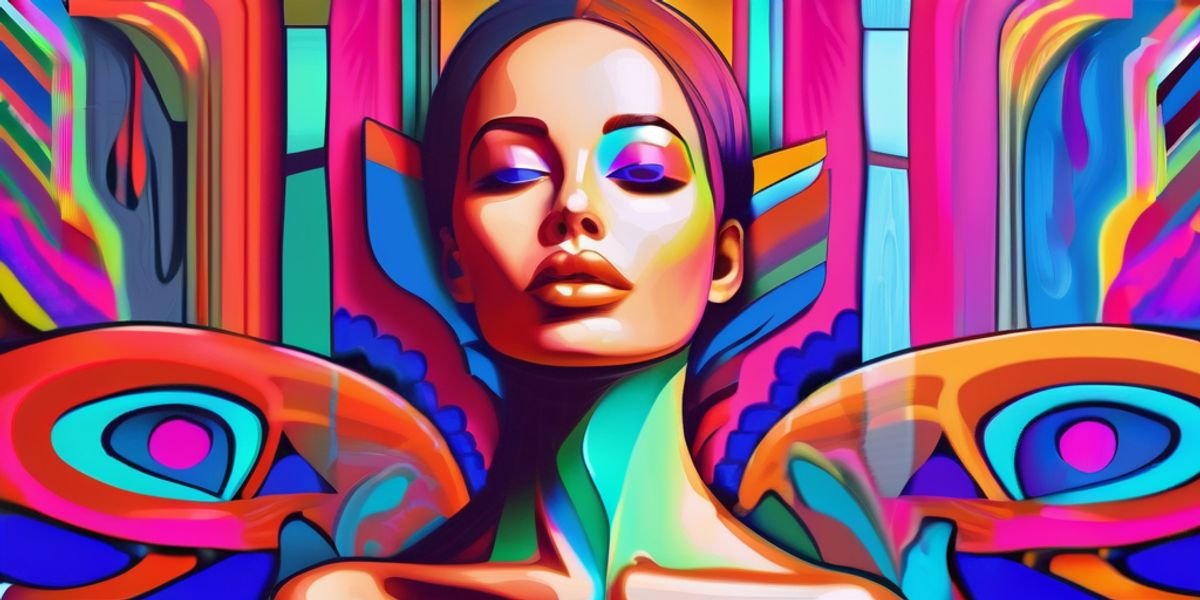
Expressing Emotions Through AI-Generated Visuals
The advent of AI technology in the realm of visual media has opened up new avenues for expressing emotions in a manner that was previously unattainable. AI image generators have become a conduit for translating complex human emotions into visual narratives, capturing the subtleties of mood and sentiment in ways that resonate with individuals on a personal level.
The process of creating these emotionally charged visuals is not without its intricacies. AI systems are trained on vast datasets to recognize and replicate emotional cues, resulting in imagery that can evoke a spectrum of feelings. This capability is particularly significant in the context of personalized content, where the aim is to forge a deeper connection with the audience.
The seamless integration of AI technology in generating emotionally expressive visuals marks a pivotal shift in how we interact with and perceive digital media.
While the technology is still evolving, the potential for AI to enhance emotional expression in visual media is immense. The following points highlight the key aspects of this transformation:
- AI’s ability to analyze and interpret emotional data.
- The creation of visuals that are not only aesthetically pleasing but also emotionally engaging.
- The potential for AI to learn from feedback and refine its emotional intelligence over time.
The Role of AI in Storytelling and Media
The integration of AI image generators into storytelling and media is a testament to the dynamic capabilities of AI Text and visual synthesis. AI Text-to-image generators are not just tools; they are collaborators in the creative process, enabling storytellers to visualize scenes and characters with unprecedented detail and speed.
- AI-driven platforms can analyze written narratives and produce corresponding visuals, enhancing the reader’s experience.
- They facilitate rapid prototyping of storyboards for filmmakers, saving valuable time in pre-production.
- AI generators can create diverse and inclusive imagery, reflecting a broader spectrum of characters and settings.
The synergy between AI and human creativity is crafting a new narrative paradigm where visual storytelling is bound only by imagination, not technical limitations.
As AI continues to evolve, its role in media will likely expand, offering more interactive and engaging ways to tell stories. The potential for AI to personalize content to individual tastes could revolutionize how we consume media, making it a deeply personal experience.
Personalization and the Human Connection
The advent of AI image generators has ushered in a new era of personalization in visual media, where the nuances of human emotion can be captured and reflected in digital imagery. AI Chat technologies are at the forefront of this transformation, enabling a deeper connection between the content and the viewer.
The ability to tailor visuals to individual preferences and emotional states is not just a technical achievement; it represents a significant shift in how we interact with and perceive digital content. The following points highlight the key aspects of this shift:
- Personalized storytelling: AI image generators can craft images that resonate with personal narratives, making each visual experience unique.
- Emotional engagement: By understanding user sentiments, AI can produce imagery that evokes the right emotions, enhancing the overall impact.
- Interactive experiences: AI Chat interfaces allow users to directly influence the creation process, resulting in visuals that are truly co-created.
The seamless integration of AI in the creation of personalized visual content is not just a technological marvel but a testament to the human desire for connection and relevance in the digital age.
As we continue to explore the capabilities of AI image generators, it is clear that the line between creator and creation is becoming increasingly blurred. This synergy promises to unlock new avenues for self-expression and emotional resonance in the visual media landscape.
Conclusion: The Dawn of a New Visual Era
As we reach the end of our exploration into AI image generators, it is clear that these tools are not just a fleeting trend but a transformative force in visual media. The capabilities of platforms like Adobe Firefly and Novel AI’s image generator are reshaping the landscape of design, art, and communication. They democratize creativity, allowing both professionals and enthusiasts to bring their visions to life with unprecedented speed and ease. The future promises even more advancements, with AI poised to deliver more sophisticated, realistic, and immersive visual experiences. As we stand on the cusp of this new era, we witness the dawn of limitless creative possibilities, where the only boundary is our imagination.
Frequently Asked Questions
How do AI image generators work?
AI image generators work by using complex algorithms to analyze and learn from vast datasets of images. They then use this knowledge to generate new images based on specific prompts or parameters provided by the user. This process involves deep learning techniques, particularly generative adversarial networks (GANs) or variational autoencoders (VAEs).
What industries can benefit from AI image generation?
AI image generation can benefit a wide range of industries including graphic design, advertising, film and gaming, scientific research, and more. It allows for rapid prototyping, data visualization, and the creation of personalized content, thereby enhancing creativity and productivity across these fields.
How does AI image generation affect artists and designers?
AI image generation tools like Novel AI are revolutionizing the roles of artists and designers by providing them with new means to express creativity, automate repetitive tasks, and collaborate with AI to produce innovative designs. However, it also raises questions about originality and the future of traditional art forms.
What advancements can we expect in AI image generation?
Future advancements in AI image generation may include more sophisticated 3D rendering, immersive experiences, and improved personalization. As machine learning technology progresses, we can anticipate AI image generators to produce even more realistic and high-quality visuals with greater speed and efficiency.
Are there ethical considerations with the use of AI in visual media?
Yes, there are ethical considerations, such as the potential for misuse in creating deepfakes, copyright issues with AI-generated art, and the impact on employment within creative industries. It’s important to address these concerns and establish guidelines for responsible use of AI in visual media.
How does AI image generation personalize content?
AI image generation personalizes content by learning from user preferences, behaviors, and input to create visuals that are tailored to individual tastes and needs. This can enhance user engagement and emotional connection with the content, whether it’s for entertainment, marketing, or personal expression.