
AI Technology Potential in Computing – Explore Now. As we stand at the cusp of a technological revolution, Artificial Intelligence (AI) continues to shape the landscape of modern computing. With advancements in AI programming, the integration of quantum computing, and the emergence of optical computing, we are witnessing unprecedented potential in computational capabilities. This article delves into the transformative power of AI technology, exploring how it’s reshaping the field of computer science, the synergy with quantum mechanics, and the future of human-machine interaction.
Key Takeaways
- AI programming is revolutionizing computer science with tools like code completion and new development paradigms, despite scaling challenges.
- The convergence of AI and quantum computing promises to revolutionize industries and solve complex problems, although integration poses challenges.
- Optical computing offers a solution to data and transistor bottlenecks, enhancing AI advancements and hardware efficiency.
- OpenAI’s innovations, such as GPT-4, are redefining AI applications and human-machine interaction, signaling a significant leap forward.
- The democratization of computing through AI is expanding access and potentially leading to a paradigm shift in computer science.
Revolutionizing AI Programming: The Future of Computer Science – AI Technology Potential
The Emergence of Code Completion Tools
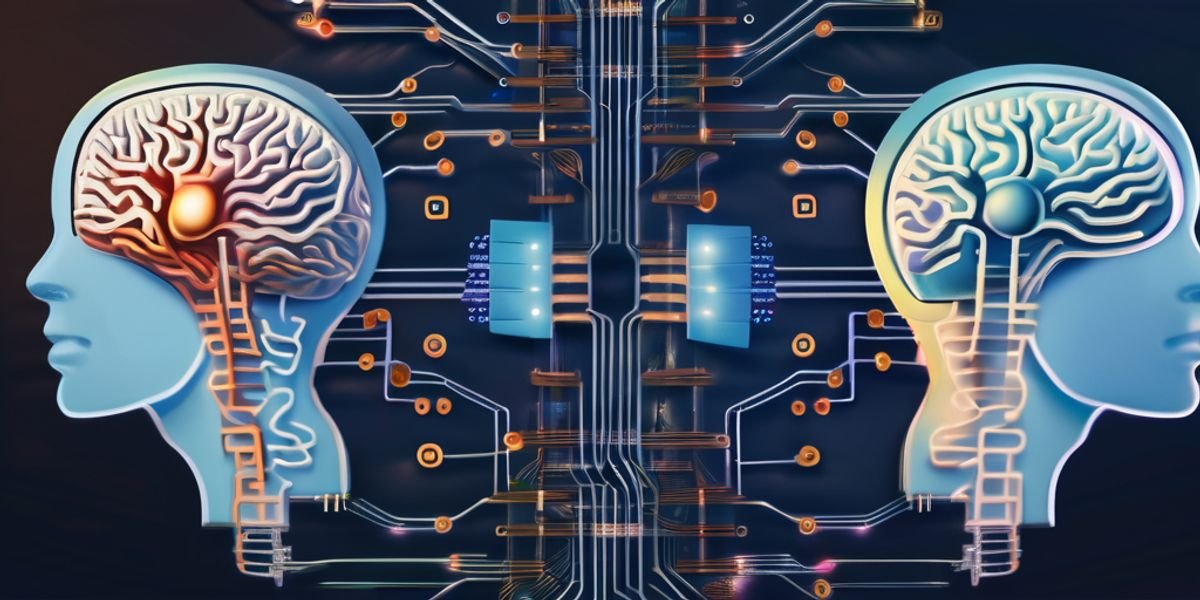
The advent of AI-driven code completion tools has marked a significant milestone in the evolution of software development. GitHub Copilot, for instance, exemplifies the power of generative models to not only autocomplete code but also to generate entire function definitions from simple comments. This leap in technology is akin to the transformative changes once brought about by the evolution of computer graphics.
- Accelerating software development by reducing time spent on routine coding tasks.
- Enhancing analytics and business intelligence through AI-powered data synthesis and forecasting.
- Providing a foundational understanding of AI’s capabilities in text generation, crucial for delving into more complex features.
The integration of AI into programming tools is not just about efficiency; it’s about redefining the creative process of coding. Developers are now empowered to focus on higher-order logic and rapid prototyping, leaving the mundane aspects of code generation to AI assistants. The ripple effect of this change is a more dynamic, innovative, and error-resistant development landscape.
Evolving Paradigms in AI Development
The journey of AI development is marked by the transition from Symbolic AI to the sophisticated Neural Networks that dominate today’s landscape. Symbolic AI, with its rule-based decision-making, laid the groundwork for AI’s initial steps. In contrast, Neural Networks mimic the human brain’s interconnected neurons, excelling in pattern recognition and learning from extensive datasets.
The symbiotic relationship between humans and AI models is fostering a new era of collaborative problem-solving and innovation.
As AI continues to evolve, the integration of these paradigms is leading to more robust and versatile AI systems. Below is a list of key milestones in AI development:
- Introduction of Symbolic AI and rule-based systems
- Emergence of Machine Learning and Neural Networks
- Advancements in Deep Learning and Big Data analytics
- Integration of AI with other technologies like IoT and Blockchain
These milestones highlight the dynamic nature of AI development, where each new paradigm builds upon the previous, leading to unprecedented capabilities and applications.
Challenges in Scaling AI Programming
As AI technology continues to advance, the challenges in scaling AI programming become increasingly apparent. Safety and regulation are at the forefront, with concerns such as overflow bugs and the need for robust technical solutions to ensure effective AI utilization. The logical reasoning limits of current AI models also pose a significant hurdle, as we strive to derive new algorithms and problem-solving methods.
- Safety and regulation
- Technical challenges
- Logical reasoning limits
The data and transistor problems highlight the scalability limitations of current AI models, raising critical questions about the future of AI advancements.
Furthermore, the integration of AI into various domains requires careful consideration of these challenges to maintain a balance between innovation and risk management. The potential for AI to expand access to computing and induce a paradigm shift in computer science is immense, but it must be approached with caution and strategic planning.
The Convergence of AI and Quantum Computing
Synergistic Potential Across Domains
The fusion of Artificial Intelligence (AI) and Quantum Computing is poised to create a transformative synergy across multiple sectors. The potential for these technologies to revolutionize industries is unprecedented, with AI’s advanced algorithms and Quantum Computing’s immense processing power combining to unlock new possibilities.
- Enhancing productivity: Auto-generated content can significantly speed up enterprise workflows.
- Inspiring learning: AI models serve as tools for meta-learning, fostering a deeper understanding of information processing.
- Mitigating bias: Thoughtful AI governance can address equity and diversity issues more effectively than traditional methods.
With the right integration strategies, AI and Quantum Computing can offer strategic value and competitive advantages. Enterprises that are proactive in implementing these technologies responsibly will likely lead the charge in innovation.
The emergence of new hybrid roles in the workforce is a testament to the collaborative nature of this technological convergence. Rather than replacing human workers, AI and Quantum Computing are expected to augment their capabilities, leading to the creation of new job categories and responsibilities.
Implications for Industry and Science
The integration of AI with quantum computing is set to revolutionize both industry and science, heralding a new era of innovation and efficiency. Business models across various sectors are poised for disruption, as AI’s predictive capabilities and quantum computing’s processing power merge to create unprecedented opportunities.
- Healthcare: Enhanced diagnostic accuracy and personalized treatment plans.
- Finance: Real-time risk assessment and fraud detection.
- Energy: Optimized grid management and renewable resource allocation.
- Transportation: Improved logistics and autonomous vehicle development.
The synergy between AI and quantum computing will not only accelerate problem-solving but also foster a collaborative dynamic between humans and machines, amplifying human potential rather than replacing it.
As industries adapt to these technological advances, the role of AI in decision-making processes becomes increasingly significant. It is crucial for leaders to strategically embrace AI, leveraging its strengths to complement human expertise and drive forward innovation. The future of computation is being redefined, stretching the limits of what was once thought possible and opening new frontiers for scientific exploration.
Navigating the Challenges of Integration
Integrating AI with quantum computing presents a unique set of challenges that must be carefully navigated to unlock the full potential of these technologies. The complexity of merging two sophisticated fields requires a strategic approach to ensure successful outcomes.
- Interoperability: Ensuring that AI algorithms can effectively communicate with quantum systems.
- Stability: Quantum systems are sensitive, and maintaining stability during AI integration is crucial.
- Scalability: As quantum technology evolves, AI integration must scale accordingly without compromising performance.
- Expertise: A shortage of professionals skilled in both AI and quantum computing can hinder progress.
The synergy between AI and quantum computing could lead to unprecedented computational capabilities, but the path forward is intricate and demands a multidisciplinary effort. The success of this convergence hinges on our ability to address these challenges with innovation and collaboration.
Optical Computing: A New Horizon for AI
Overcoming the Data and Transistor Bottlenecks
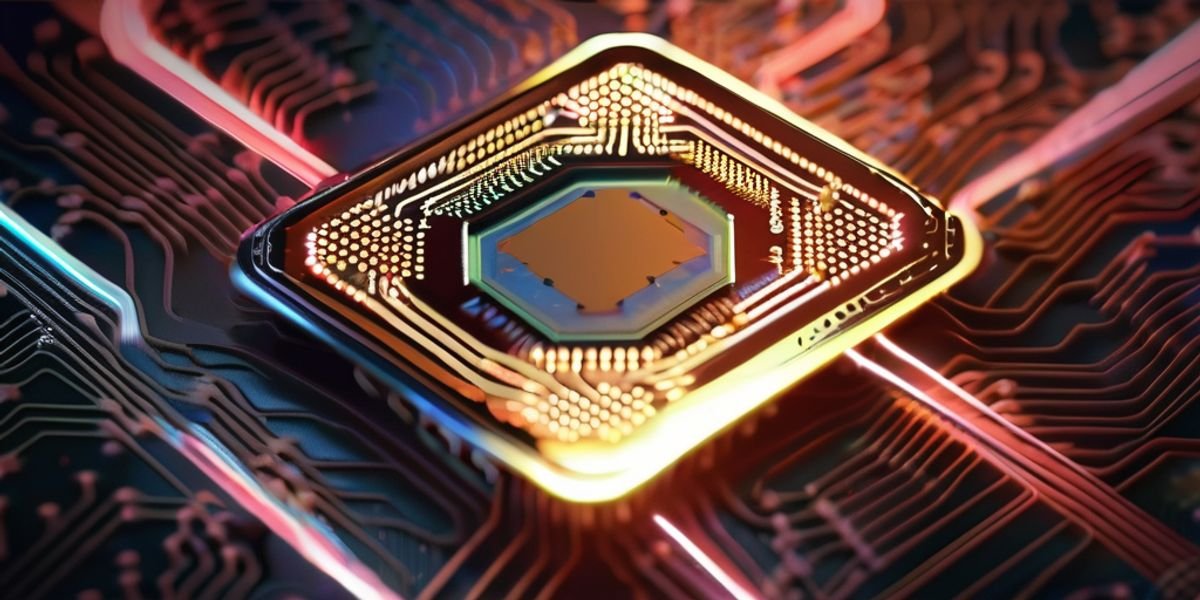
The relentless pursuit of AI advancements is hindered by the data and transistor bottlenecks that challenge the scalability of current models. Traditional computing methods, when tasked with AI’s demands, generate excessive heat due to rapid data movement through processors’ metal wires. Photonic technology, leveraging light, promises to bypass these limitations, offering a cooler and swifter data processing solution.
Optical computing, while not yet fully mature, holds the key to unlocking AI’s potential. By using light’s wave-like nature and improving optical memories, researchers aim to enhance computational speed and efficiency.
Current efforts in optical computing include:
- Developing multilayer photonic networks for accelerated and efficient computing.
- Demonstrating on-chip, fully analog photonic in-memory accelerators.
However, these innovations must overcome hurdles such as error rates and scalability to realize their full potential. As we navigate these challenges, the integration of optical computing in AI could mark a new era of hardware efficiency, redefining the landscape of modern computing.
Optical Computing’s Role in AI Advancements
Optical computing, leveraging the speed of light, is poised to revolutionize AI Image processing and analysis. The integration of photonic technology in AI systems promises unprecedented computational speeds and efficiency. This paradigm shift is not just theoretical; it’s underway, with research focusing on enhancing optical computing’s speed, reliability, and efficiency.
Optical computing’s potential in AI is vast, with the ability to process data at the speed of light, offering a significant leap over traditional electronic systems.
Current efforts in the field include two primary approaches: harnessing the wave-like nature of light for increased efficiency and improving optical memories for greater computational throughput. These advancements are critical as AI applications become increasingly complex and data-intensive.
- Speed Enhancement: Utilizing light’s wave properties to boost processing speeds.
- Reliability Improvement: Developing more stable optical components.
- Efficiency Gains: Innovating optical memories for higher throughput.
The transition to optical computing in AI is not without its challenges, but the potential benefits are clear. As traditional hardware struggles to keep up with the demands of AI Image services, optical computing stands as a beacon of hope for the future of AI technology.
The Future of Hardware Efficiency
As AI continues to evolve, the quest for hardware that can keep pace is relentless. Optical computing emerges as a beacon of hope, offering a solution to the data and transistor bottlenecks that currently hinder progress. This innovative approach leverages the wave-like nature of light, promising to revolutionize the efficiency of optical computing.
Optical computing has the potential to process data at incredible speeds without the heating issues that plague current metal wire-based processors. This leap in processing capability is crucial for the data-intensive demands of AI.
The benefits of optical computing are not just theoretical; they are being actively pursued through research and development. Here’s a glimpse into the advancements being made:
- Increased Speed: Utilizing light’s properties for faster data processing.
- Reliability: Enhancements in optical components for consistent performance.
- Efficiency: Overcoming the heat generation issue, allowing for more efficient computation.
The journey towards a future where machines can emulate human cognition with unprecedented accuracy is underway. As we redefine the boundaries of computation, it’s essential to collaboratively address the challenges and opportunities that lie ahead, shaping a future that is intelligent and equitable.
The Future of AI with OpenAI’s Latest Advancements
Innovations in AI APIs and Integration
The OpenAI API has emerged as a pivotal tool for developers aiming to harness the power of AI. The simplicity and versatility of the API are lowering the barriers to entry, making advanced AI capabilities more accessible to a broader audience. This democratization of technology is crucial for fostering innovation and creativity in the digital realm.
For instance, the Assistant API enables the creation of AI-driven chatbots, sophisticated decision-making tools, and adaptive learning systems. Here’s a glimpse into the diverse applications:
- AI-driven customer support chatbots
- Insightful data analysis for informed decision-making
- Personalized educational experiences
The journey from basic command-line interactions to complex AI-integrated applications illustrates the transformative impact of AI on our digital experiences.
The OpenAI API, with its CLI Testing Tool and Assistant API, is not just a gateway to AI technology but a catalyst for groundbreaking applications. It signifies a future where AI transcends mere automation, offering solutions that engage with us in more human-like ways.
The Impact of GPT-4 on AI Applications
The introduction of GPT-4 by OpenAI has been a game-changer in the realm of AI applications. Its enhanced natural language understanding and generation capabilities have opened new avenues for creativity and functionality, enabling multimodal AI applications that were previously unattainable. The impact of this advancement is far-reaching, affecting various sectors from healthcare to finance, and education to entertainment.
- Introduction and Capabilities: GPT-4 marks a significant leap forward in AI, with improved algorithms that understand context and nuance better than ever before.
- Applications and Implications: The technology is not just a tool but a partner in creative and analytical tasks, pushing the boundaries of what machines can achieve.
- Future Trajectory: As GPT-4 continues to evolve, it will likely influence the development of ethical frameworks and societal guidelines for AI.
The advent of GPT-4 stands as a testament to the relentless pursuit of innovation in artificial intelligence, promising to reshape the landscape of text generation and digital interaction.
The trajectory of GPT-4 will be dictated by both its technical capabilities and the ethical considerations of its use. As we integrate this powerful tool into society, it is crucial to ensure that its benefits are distributed equitably and responsibly. The future of AI applications looks bright with the promise that GPT-4 holds, heralding a transformative impact on how we interact with technology.
Redefining Human-Machine Interaction
The integration of AI into our daily lives is not just transforming the way we interact with machines, but it’s also redefining the very nature of those interactions. A future where machines emulate human cognition with unprecedented accuracy and efficiency is no longer a distant dream but an emerging reality. With the advent of technologies like AutoGPT, we’re witnessing a technological tour de force that is reshaping the landscape of human-machine interaction.
- New hybrid roles: The emergence of generative models is creating new job categories where humans and AI systems work in tandem, particularly in fields like software development and manufacturing.
- Work automation: AI’s ability to automate repetitive tasks at scale is leading to a shift in job responsibilities, especially in administrative and analytical roles.
- Changing skills emphasis: As AI takes over specific tasks, human skills such as abstraction, problem framing, and prioritization are becoming increasingly valuable.
The synergy between human creativity and AI’s computational power is crafting a new paradigm in the workforce. This collaboration is not about replacing humans but augmenting our capabilities, leading to enhanced productivity and innovation.
The table below illustrates the impact of AI on job roles and skills development:
| Aspect | Impact of AI Integration |
|---|---|
| New Hybrid Roles | Creation of collaborative job categories between AI and humans |
| Work Automation | Shift in job responsibilities, with a focus on reskilling |
| Changing Skills Emphasis | Increased value on human-centric skills |
As we navigate this transition, it’s imperative that we focus on reskilling and education to harness the full potential of human-AI collaboration. The future of human-machine interaction is not just about technological advancement, but also about the evolution of our workforce and societal structures.
AI Programming: Expanding Access and Redefining Computing
The Democratization of Computing Through AI
The advent of AI technology has heralded a new era in the democratization of computing. AI is making technology more accessible, enabling individuals to engage with advanced models with ease. This shift is not just about simplifying the user experience; it’s about fostering an environment conducive to innovation and understanding.
- AI reduces the complexity of technological interaction, allowing for broader participation.
- It opens doors to exploration and learning, essential for democratizing knowledge.
- Simplified access to AI, such as through streamlined command-line interfaces, empowers more people to experiment and innovate.
The potential shift towards AI programming could expand access to computing for the entire human population, leading to a paradigm shift in the field of computer science.
The implications of this are profound, as AI becomes a tool for empowerment rather than an exclusive domain of experts. By lowering the barriers to entry, we are witnessing the emergence of a new generation of technologists, entrepreneurs, and thinkers who are equipped to harness the power of AI to solve complex problems and drive progress.
AI’s Role in Bridging the Digital Divide
AI Technology is poised to play a pivotal role in bridging the digital divide, offering unprecedented access to computing resources across diverse populations. AI Chat interfaces and AI Text generation tools are at the forefront of this transformative movement, simplifying interactions and enabling intuitive use of technology.
- AI Chat: Facilitates real-time communication and support, making technology more accessible.
- AI Text: Automates content creation, aiding in education and information dissemination.
By lowering the barriers to entry, AI is not only making technology more approachable but also fostering a culture of exploration and learning. This democratization of AI is crucial for empowering individuals to innovate and understand AI on a deeper level.
The potential shift towards AI programming could expand access to computing for the entire human population, leading to a paradigm shift in the field of computer science.
The integration of AI into everyday applications is making advanced technology more approachable for educational purposes and practical applications alike. With AI’s assistance, we are witnessing a significant reduction in troubleshooting and setup complexities, which in turn opens doors to a broader audience eager to engage with the digital world.
Envisioning a Paradigm Shift in Computer Science
The integration of AI into the fabric of modern computing heralds a transformative era in computer science. The potential shift towards AI programming could expand access to computing for the entire human population, leading to unprecedented levels of innovation and inclusivity. This shift is not merely about technological advancement but also about redefining the very nature of problem-solving and creativity.
- Democratization of Technology: AI’s accessibility empowers individuals and communities.
- Enhanced Problem-Solving: AI’s computational prowess tackles complex challenges.
- Creative Collaboration: AI as a partner in human ingenuity and artistic expression.
The future beckons with a promise of AI seamlessly integrated into the daily fabric of societal functions, enhancing human capabilities and fostering a more connected world.
As we stand on the brink of this new era, it is crucial to address the challenges that accompany such a shift. Ensuring equitable access and preventing the exacerbation of the digital divide must be at the forefront of this transformation. The road ahead is paved with both opportunities and obstacles, but the collective effort of the global community can steer this paradigm shift towards a future that is both intelligent and equitable.
Conclusion
In summary, the integration of AI technology in modern computing is not just an incremental step forward; it’s a quantum leap into the future of computational capabilities. The insights provided by experts like Youngblood and the innovative strides made by entities such as OpenAI underscore the transformative impact of AI and Quantum Computing. As we grapple with the data and transistor challenges, the fusion of these technologies offers a beacon of hope, promising to overcome scalability limitations and redefine the boundaries of what machines can achieve. The potential for AI to democratize access to computing resources and enhance human-machine interaction is unprecedented. The road ahead is fraught with challenges, but the opportunities are boundless. We stand at the cusp of a new era where AI’s potential in modern computing heralds a future of unimaginable innovation and progress.
Frequently Asked Questions
What is the significance of optical computing in AI?
Optical computing is significant in AI as it addresses the data and transistor bottlenecks that traditional hardware faces. It provides a new way to support data-hungry AI systems, potentially surpassing the efficiency gains of current computing technology.
How is AI programming evolving in modern computer science?
AI programming is evolving through the development of tools like code completion and the exploration of new paradigms, which are expanding the possibilities of AI and revolutionizing the field of computer science.
What are the challenges and opportunities of integrating AI with quantum computing?
The integration of AI and quantum computing presents challenges in terms of technological compatibility and complexity. However, it also offers opportunities to solve complex problems, drive innovation, and redefine the boundaries of computation.
How do AI and quantum computing complement each other?
AI and quantum computing complement each other by leveraging quantum mechanics to enhance AI capabilities, leading to the potential for solving intractable problems and revolutionizing industries.
What impact has OpenAI’s GPT-4 had on AI applications?
OpenAI’s GPT-4 has had a significant impact on AI applications by enhancing the integration of AI capabilities into various domains, creating more intuitive experiences, and redefining human-machine interaction.
How is AI contributing to the democratization of computing?
AI is contributing to the democratization of computing by making advanced computing resources more accessible to a broader audience, potentially leading to a paradigm shift in computer science and bridging the digital divide.